
birds

Budgerigars in New Zealand: Are we underestimating them?

The distinctive chatter of budgerigars has been a soundtrack to New Zealand childhoods for generations. In lounges from Auckland to Invercargill, these small birds have occupied corner cages, their cheerful chirps punctuating family dinners and lazy Sunday afternoons. But what do these intelligent, social creatures actually need to thrive? 
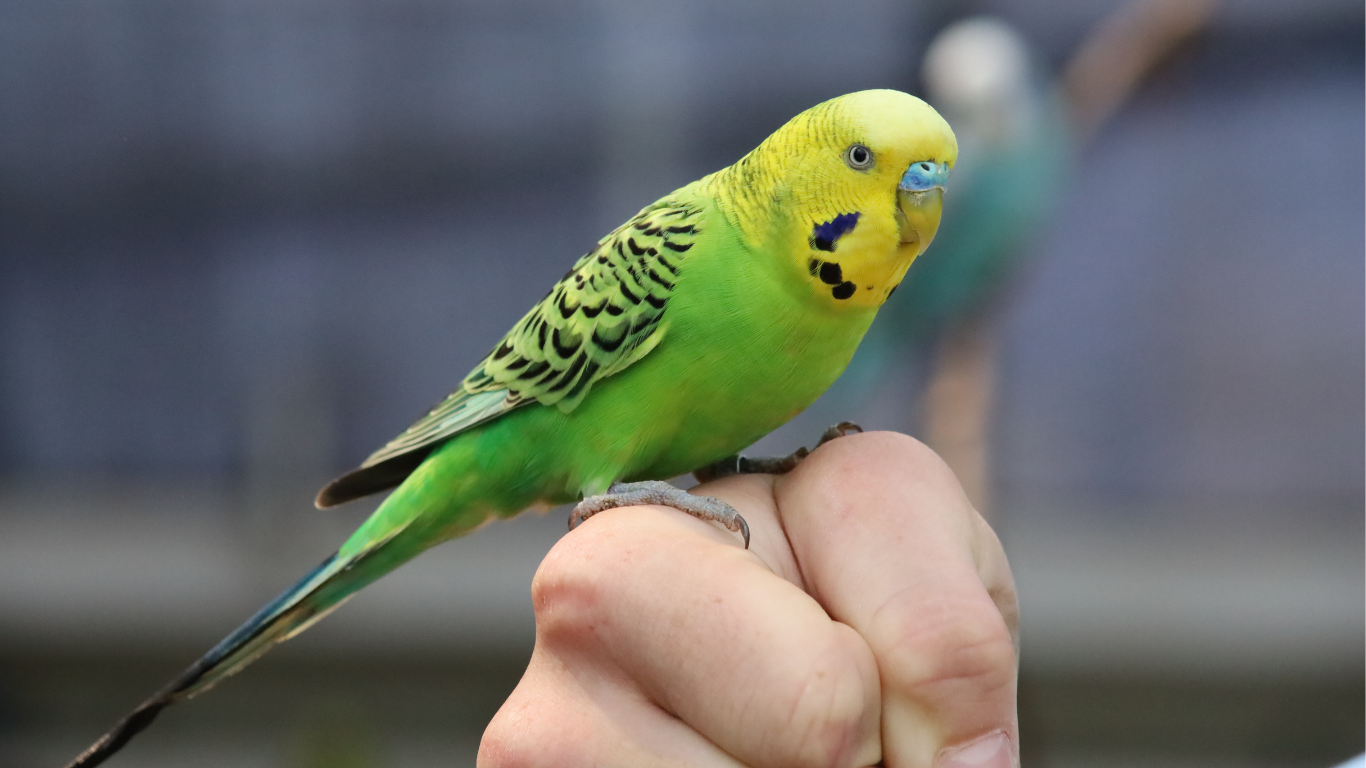
A brief history of budgies in Aotearoa 

The budgerigar (Melopsittacus undulatus) is a unique Australian species and the name budgerigar originates from the Aboriginal term ‘Betcherrygah,’ which anecdotally means: ‘Good food’. While Aboriginals once regarded the species as a food source, today budgerigars are widely recognised as intelligent, social companions rather than as food. People made the first recordings of budgerigars in the early 1800s¹. In Australia, vast flocks move nomadically across the landscape in search of water and seeding grasses. These hardy little birds are believed to have first arrived in New Zealand in the late 1800s to early 1900s, but by the mid-1900s had become firmly established in New Zealand's pet culture, and in 1934 the NZ Budgerigar Society was formed². Their small size and modest price made them accessible to many families, while their breeding potential attracted hobbyists who developed increasingly varied colour mutations.  

The Appeal of Budgies 

It's easy to understand why budgerigars are considered to be one of New Zealand's most popular pet birds³. They are charming, intelligent companions that pack remarkable personality into a 30-gram body.  

  • Accessibility and affordability play a significant role. Budgies are relatively inexpensive to purchase, with pet shop birds typically costing between $20-60, though they may occasionally be available for adoption or through rehoming situations. Their small size makes them suitable for apartment living or homes without large outdoor spaces. For families wanting to introduce children to pet ownership, budgies seem like a manageable first step. 

  • Intelligence and personality set budgies apart from other small pets. Despite their diminutive size, budgerigars are true parrots with the cognitive abilities that entails. They can learn to mimic human speech - some individuals developing vocabularies of hundreds of words⁴ - and they demonstrate problem-solving skills, playfulness, and distinct personalities. A well-socialised budgie can form genuine bonds with their human caretakers, seeking out interaction and responding to familiar voices. 

  • Visual appeal has been enhanced through generations of selective breeding. While wild budgerigars display green and yellow plumage with black barring (black stripes on their head, back and wing coverts), captive breeding has produced an extraordinary range of colours: blues, whites, yellows, greys, and violet shades, along with various pattern mutations like pieds and spangles.  

  • Lifespan and commitment fall into a middle ground. In captivity with proper care, budgerigars commonly live 8-12 years. Exceptional individuals can reach 15-20 years, and the oldest recorded budgerigar, a bird named Charlie from England, lived to 29 years and 2 months⁵.  

The Welfare Reality 

Although budgerigars are popular pets, they frequently receive inadequate care, partly because their reputation as 'easy pets' results in insufficient attention to their nutritional needs, living conditions, mental stimulation, and veterinary care - all of which compromise their welfare in domestic settings⁶. 
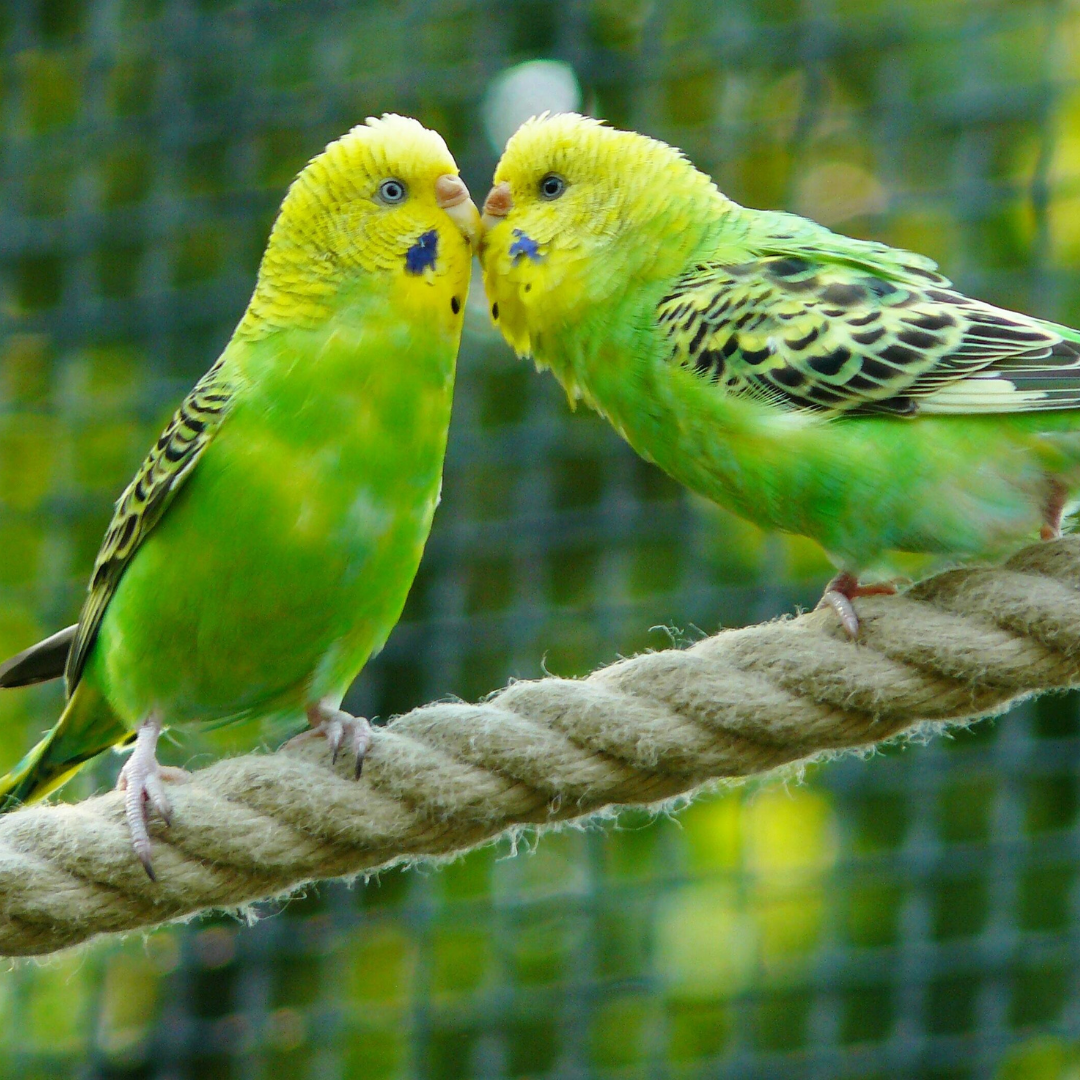
  • Appropriate socialisation and housing: Social isolation and housing is likely the most widespread welfare concern. Wild budgerigars in Australia live in enormous flocks, sometimes containing thousands of individuals. These highly social birds continuously communicate with one another, engage in mutual feather care and grooming (known as preening), and participate in group activities. However, the conventional pet budgerigar setup typically features a lone bird in a cage, often with only a mirror to provide social stimulation. Inadequate cage size exacerbates these welfare concerns.  
     
    Standard budgerigar cages available in pet stores, often around 40cm in width, offer only just enough space for a budgie to fully spread its wings. Providing more space is preferable. The cage should include nesting boxes or areas with shrubbery cover where budgies can feel safe and have places to hide and rest. Toys should be rotated regularly to maintain interest, e.g., foraging toys that hide treats, shredding toys made from paper or palm leaves, climbing structures, wooden ladders, rope perches, and tree stands all serve different enrichment functions. Budgies also enjoy bathing, so providing a shallow dish of water for this purpose contributes to their wellbeing.  
     

  • Time outside their cage: It is important to give budgies supervised time outside of their cages and provide them with environmental enrichment opportunities (e.g. foraging toys). Several hours of free flight daily helps maintain physical health and provides essential mental stimulation. This requires careful preparation: close all windows and doors, keep other pets out, turn off ceiling fans, hide electrical cords, remove or secure household plants (many are toxic), and cover large mirrors and glass windows to prevent collision injuries. 
     

  • A balanced diet is essential for budgerigar wellbeing, yet many pet birds receive inadequate nutrition. Commercial seed mixes may be high in fat and deficient in essential nutrients, and seeds alone cannot provide complete nutrition. A proper diet should consist predominantly of high-quality pellets formulated for budgerigars, supplemented daily with a variety of fresh vegetables (such as broccoli, carrots, and dark leafy greens), sprouted seeds, and limited fruit offered weekly as treats (like banana, apples, or melon). Pellets are recommended as the dietary foundation because they provide balanced nutrition that birds cannot selectively avoid, ensuring they receive all required nutrients rather than choosing only their preferred (and often least nutritious) food items. Budgerigars must have access to fresh, clean water at all times, and mineral blocks should be provided for essential calcium, particularly during moulting or breeding.  

Caring for budgerigars requires more than casual attention; these intelligent, social birds have specific needs for companionship, space, diet, mental stimulation, and veterinary care. Even in pairs, they benefit from daily interaction with their human family, who become part of their flock. Rather than assuming they are “starter pets,” prospective owners should honestly assess whether they can provide the right circumstances: a suitable home, at least two birds, a varied diet, and a decade-long commitment. When those needs can be met, budgerigars are delightful, engaging companions; if not, it may be worth reconsidering whether they are the right fit for your household. 


 References: 

¹The Budgerigar Council of South Australia. (n.d.). History of the budgerigar. BCSA. https://bcsa.com.au/varieties/history-of-the-budgerigar 

²Flockhart, K. (2020). 75 years history of the Budgerigar Society of New Zealand. Budgerigar Society NZ. https://budgerigarsociety.nz/wp-content/uploads/2020/09/75-Years-History-of-the-BSNZ-by-Keith-Flockhart.pdf 

³Hastings District Council. (n.d.). Budgerigar – Cornwall Park bird aviary. Hastings District Council. https://www.hastingsdc.govt.nz/hastings/reserves/cornwall-park/cornwall-park-bird-aviary/budgerigar 

Leffer, L. (2025, 19 March). We finally know how parrots ‘talk’: Budgie brains reveal parallels between parrot and human speech. Popular Science. https://www.popsci.com/environment/budgie-brains-reveal-parallels-between-parrot-and-human-speech 

Guinness World Records. (n.d.). Oldest budgerigar in captivity. Guinness World Records. https://www.guinnessworldrecords.com/world-records/70897-oldest-caged-budgerigar 

Chalmers, R., Cooper, J., & Ventura, B. (2024). What are the priority welfare issues facing parrots in captivity? A modified Delphi approach to establish expert consensus. Animal Welfare, 33, e54. https://doi.org/10.1017/awf.2024.57 

Why parrots are unlike any other pet

All animals communicate with us in their own unique way. But can they all mimic our speech? Parrots are fascinating creatures that have captivated human hearts for centuries with their vibrant plumage, mimicking abilities, and engaging behaviour. 

World Parrot Day is 31 May each year and began in 2004, as a way to let everyone know that these remarkable birds need protecting in the wild. As we celebrate World Parrot Day, it's important to acknowledge the incredible beauty, intelligence, and personality of these spectacular birds.  

However, while many people may be drawn to the idea of having a parrot as a pet, it’s crucial to understand that these birds have complex needs and not all parrots are suited for life as a companion animal. Some birds also pose a threat to our native birds by dominating their food sources and nesting sites, so you must know about your species. Fr example, it is illegal to release a rainbow lorikeet into the wild. 

In this article, we aim to celebrate the wonder of parrots by exploring what makes them extraordinary companions for those who can meet their needs – while also acknowledging that their complex requirements, long lifespan, and potential for behavioural issues in the wrong circumstances, make them unsuitable pets for most people.  

Ensuring the welfare of these magnificent creatures often means leaving them in their natural habitats or in the care of experienced and dedicated avian enthusiasts. For those who truly love parrots, supporting conservation efforts and educating others about the challenges of keeping parrots as pets can be a more effective way to appreciate and protect these birds. 

 High-flying cognitive abilities 

Parrots are perceived to be highly intelligent creatures, known for cognitive abilities, vocal mimicry and social intelligence. While parrots are not the only animals that can mimic human speech, their vocal abilities and cognitive skills make them uniquely adept at this form of communication, contributing to their popularity and fascination as pets. 

When we think about common companion animals – like cats and dogs – we know every animal exhibits different types of intelligence which are adapted to their specific ecological niches and evolutionary histories. In short – all pets are smart in their own species-specific way!  

For example, dogs are highly trainable and can learn a wide range of commands and tasks. Cats are excellent problem solvers and are known for their agility and hunting skills. Each animal has unique strengths that highlight different aspects of intelligence. 

Some of the more complex abilities parrots display include: 

  • tool manufacture 

  • mirror self-recognition 

  • object permanence (when you know an object or person still exists even when they are hidden and you can't see or hear them)

  • meta-cognition (awareness or analysis of one's own learning or thinking processes) 

  • theory of mind (the ability to understand the thoughts, beliefs, desires, and emotions of other people) 

  • vocal learning - unique in their ability to mimic human speech and other sounds, which requires advanced auditory learning and vocal control. 

  • mental time travel (the capacity to mentally reconstruct personal events from the past as well as to imagine possible scenarios in the future) 

  • and complex social cognition (being able to interpret social information and behave appropriately in a social environments) [1] 

Parrots are highly social animals, and their intelligence is often reflected in their complex social interactions and ability to form strong bonds with their human caregivers.  

Some parrots, especially African Grey parrots, have shown remarkable problem-solving and understanding of abstract concepts like numbers and colours . 

The story of Alex 

Alex the parrot, an African Grey, is one of the most famous and studied birds in history, known for his remarkable cognitive abilities and contributions to the understanding of animal intelligence.  

Alex was born in 1976 and was purchased from a pet store by animal psychologist Dr. Irene Pepperberg. The name "Alex" stands for Avian Learning EXperiment. Under Dr. Pepperberg's training, Alex demonstrated the ability to use over 100 words meaningfully. He could identify colours, shapes, sizes, and quantities, and could understand concepts like "same" and "different." 

Alex could count up to six objects, understand the concept of zero, and perform tasks that required an understanding of categories and abstract thinking. He showed the ability to express desires, make choices, and even exhibited behaviours that suggested a form of emotional understanding. 

Alex died unexpectedly on September 6, 2007, at the age of 31. But his passing didn’t stop his legacy living on – with his achievements continuing to garner attention and respect from both the scientific community and the general public. Alex's abilities challenged the prevailing assumptions about the intellectual capacities of birds and animals in general. The Alex Foundation, established by Dr. Pepperberg, continues to support research and educational initiatives to advance the study of animal cognition and promote conservation efforts. 

His last words to Dr. Pepperberg were reportedly, "You be good, see you tomorrow. I love you." 

[Alex image source: New York Times]

What parrots need to live a Good Life 

Being kept in captivity might prevent parrots from doing all the things they'd normally do in the wild. This is especially true for pet parrots in homes where they can't socialise much, fly freely, find their own food, or do regular bird behaviours like bathing and grooming themselves. [2]

That is why it is so important to understand what a significant commitment having a companion parrot is, and to pay careful consideration to how they can live a Good Life. You must ensure you are acquiring your parrot legally and ethically, and do your research on the care levels required.  

Here are some key considerations: 

  • Lifespan: Parrots can live for several decades; some species, like African Greys and Macaws, can live up to 60 years or more. Be prepared for a long-term commitment and plan for the parrot's care in the future.  

  • Space and housing:

    • Parrots need spacious cages and plenty of room to exercise and fly. Provide a large, well-ventilated cage with appropriate perches, toys, and climbing structures.

    • Allow for supervised out-of-cage time daily if appropriate for your species (eg . If you own a rainbow lorikeet you must be a responsible owner and keep it in secure caging. Advice is available from the Department of Conservation on how to construct suitable caging that reduces the risk of the birds escaping).

    • Parrots are curious and can get into dangerous situations, so proof your home by removing toxic plants, securing electrical cords, and ensuring they can't access harmful substances.

    • Parrots may not always get along with other pets, so introduce other pets cautiously and ensure the parrot has a safe space away from potential threats. 

    • Did you know you can also microchip and register your bird on the NZ Companion Animal Register? This is another way you can ensure you are reunited should you become separated.

  • Diet: Parrots require a varied diet to stay healthy, including seeds, pellets, fruits, vegetables, and nuts – depending on your individual bird’s needs. Ensure a balanced diet with fresh water always available, and avoid toxic foods like avocado, chocolate, caffeine, and alcohol. Speak with a vet if you’d like advice when choosing a diet to suit your bird’s needs. 

  • Social interaction and mental stimulation:

    • Parrots are highly social and intelligent birds that require interaction and mental stimulation to prevent boredom and behavioural issues.

    • Parrots are generally not solitary animals. In the wild, many parrot species live in flocks or groups, exhibiting social behaviors such as foraging together, grooming each other, and communicating through vocalisations and body language. It is often advised that pet birds are housed in groups or pairs of compatible species to ensure that their need for social contact is met.

    • Pet birds often consider their human family as part of their social “flock”, and so when kept as pets, parrots often form strong bonds with their human caregivers. No matter if you have a solo companion bird or multiple, it is important to spend time interacting with your parrot daily and provide a variety of toys, puzzles, and foraging activities to keep their minds engaged. 

  • Noise: Parrots can be very loud, and their vocalisations might be disruptive. Be prepared for the noise level and consider whether your living situation can accommodate it, especially if you have close neighbours. 

  • Health care: Parrots require regular veterinary care from a vet specialising in avian medicine. Schedule annual check-ups and be vigilant for signs of illness, such as changes in appetite, droppings, or behaviour. Ensure your parrot is vaccinated and protected from diseases. 

  • Behaviour and training: Parrots can develop behavioural issues like biting, feather plucking, and screaming if not properly trained and socialised. Invest time in positive reinforcement training and socialisation from an early age. Try to learn to understand their body language and respond appropriately. 

  • Routine and stability: Parrots thrive on routine and can become stressed with changes, so it is good to minimise changes in their environment (outside of those for enrichment and stimulation). Maintain a consistent daily routine for feeding, interaction, and sleep.  

Parrots are extraordinarily unique. The responsibilities that come with being a guardian for these remarkable birds cannot be emphasised enough, and we acknowledge that some parrots thrive best in their natural habitats or in conservation settings. What is undeniable, is that parrots can form special bonds with humans when they are cared for responsibly and ethically.  

As we delve deeper into the realm of animal intelligence, exemplified by the life of Alex the parrot, we gain a clearer understanding of just how complex and advanced these birds truly are. This ongoing research allows us to enhance our knowledge of how to ensure their wellbeing and thriving. 


A note about native parrots 

There are eight surviving parrot species that are unique to New Zealand and it is essential to appreciate and protect native parrots in their natural environments.

The mainland species include the kea (Nestor notabilis), the New Zealand kākā (Nestor meridionalis), the kākāpō (Strigops habroptilus).

There are also three species of kākāriki (meaning ‘small green parrot’ in Māori): the yellow-crowned parakeet (Cyanoramphus auriceps), the red-crowned parakeet (Cyanoramphus novaezelandiae), and the orange-fronted parakeet (Cyanoramphus malherbi). 

As of 2023, the total kākāpō population is 247, with intensive management efforts to prevent its extinction. The orange-fronted parakeet is Critically Endangered, the kākā is listed as Vulnerable, and the kea is classified as Endangered. 


References:

1 Science Direct: Why Birds are Smart (Onur Güntürkün, Roland Pusch, Jonas Rose)

2. Kennedy and Draper, 1990, van Hoek and ten Cate, 1998, Engebretson, 2006, Gaskins and Hungerford, 2014