CANZ news

Microchip myth-busting!

There are a lot of myths out there about microchipping and registration of pets, so we decided to use the month of May to bust many of them! 

Firstly, what is a microchip? A microchip is a small device about the size of a grain of rice implanted in your companion animal. The microchip holds a unique number that needs to be registered to a database and associated with your details – this unique number can be read using a microchip scanner by an Approved User (including Vets, SPCA and many animal rescues). 

Microchipping then registering your animal is an important part of responsible ownership. The NZ Companion Animal Register (NZCAR) was created by Companion Animals New Zealand as a database to hold microchip information with guardian details and has over 1.3 million animals on it. The NZCAR helps lost pets get home to their worried families. 

Now let’s get to the myth-busting! 


1: MYTH: Microchips have GPS / can track location  

FACT: A microchip is not a GPS or tracking device, so nobody can track your pet's location via the microchip for any purpose, whether this is to attempt to steal them or to help recover them if they become lost. Microchips are passive and only ‘activate’ in the presence of an appropriate scanner (which will read the microchip number). 


 2. MYTH: My dog is registered with the Council (National Dog Database) so doesn’t need to be registered with the NZCAR  

FACT: The National Dog Database (NDD) Council registration and the NZCAR serve different purposes. The NDD is mandatory and helps monitor dangerous dogs. The Dog Control Act 1996 mandates registration of dogs over three months old with local councils. These details are accessible only by Council staff.  

Our NZCAR is voluntary, created to provide a national database of all microchipped pets, accessed by Approved Users (such as vet clinics and SPCA), so that found pets can quickly be returned home.

It is extremely important that new dog owners understand these differences so that they can make an informed decision for their pet. Check out our handy 'differences' graphic here: https://www.animalregister.co.nz/.../A4-Database... 


 3. MYTH: The microchip itself holds guardian information  

FACT: A microchip contains only a unique number which can be read using a microchip scanner. That number must then be associated with the guardian's details in a database such as the NZCAR in order for that microchip to be used to get the pet home. Once an animal is found they can then be scanned by more than 900 Approved Users around NZ to see if the animal has a guardian associated with them. 


 4. MYTH: The Guardian's personal information is exposed via the microchip itself (anyone could access details)  

FACT: A pet’s microchip number is linked to their guardian’s details on a secure database (such as the NZCAR). NZCAR Approved Users can only search the database by microchip number so they must have your pet and approved access to NZCAR, in order to find your details. Any time you log into your account, you can review the details that would be visible, should your animal be found and scanned by an Approved User of the NZCAR. We take privacy seriously and recently had an independent assessment confirming our system is very secure. 


 5. MYTH: Registration is automatic. An animal's microchip is immediately registered to a database when it is implanted 

FACT: Registration is not automatic to any databases. Even your veterinary team, SPCA or local council will need to manually enter your pet’s microchip number into their own system at the time of implantation.  

Most veterinary teams will begin the NZCAR registration process for their clients, but it's important to expect an email from the NZCAR. This will tell you that registration is successful AND ask you to log in to ensure your details have been entered correctly and to complete all remaining fields (you can even add a photo of your pet!). 


 6. MYTH: Vet clinics can access each other’s systems so it is not important to register on the NZCAR 

FACT: Veterinary clinics can only access their own clinic’s client information and animal data. If your pet were to go missing and their microchip number was only stored on your vet clinic’s system, your pet would need to be taken to your vet clinic in order for them to contact you. What if your pet wandered to the next neighbourhood, or a kind citizen picked up your pet and took them to their vet across town?! Having your pet registered on the NZCAR means your contact details can be accessed by over 900 Approved Users all around NZ – including all vets, SPCA and many animal rescues. 


7. MYTH: Implanting is painful/unsafe 

FACT: Placing a microchip is a very common procedure. For many species, the microchip is implanted under the scruff or the skin of the neck and does not cause any more than slight discomfort – the same as anyone would feel if they received an injection! 
It is important that your animal is microchipped by a vet or trained professional to ensure the microchip is located and implanted correctly (which varies between species). This professional will know how best to restrain your animal, before and after care, and correct implantation technique to ensure the safety of your animal.  


8. MYTH Microchips cause long-term health issues  

FACT: Microchipping has an established, long-term health safety record. While it is not possible to claim that a reaction to an implanted microchip will never happen, microchipping is considered a safe procedure endorsed by veterinary professionals, and as such, the likelihood of your pet experiencing an adverse reaction is very low.  

The benefits of having your pet positively identifiable (and therefore increased chances of being reunited with them should they become lost), far outweigh any rare and unlikely negative health impacts associated with the procedure. 


9. MYTH Only cats and dogs can be microchipped 

FACT: The NZCAR has over 1.3 million animals registered of many species! These absolutely do include cats and dogs, but also horses, rabbits, guinea pigs, rats, cows, turtles and more! If you have an animal that, should it go missing, you would like linked back to your contact details – microchip and register them on the NZCAR. Ask your vet today about ensuring ALL your beloved companions are microchipped and registered. 


So, there we have it! Nine of the most common myths around microchipping. If your pet is not microchipped, getting one implanted is quick, easy and affordable. Give your local vet clinic a call and ask them about booking an appointment or adding the procedure to an existing appointment. You could also reach out to a mobile vet/nurse in your area that may provide this service in your home. You can view a list of approved implanters here. 

 Microchipping is an essential part of responsible pet ownership. Read more about it on our NZCAR website: animalregister.co.nz.

Video: Professor Nat Waran on her work with International Equine Ethics and Wellbeing Commission

At the recent International Society for Equitation Science (ISES) conference at Cambridge, New Zealand, in March 2024, Professor Nat Waran from Companion Animals New Zealand spoke about the work she led in developing a proposed welfare strategy with a new vision of a Good Life for Horses in Sport.

As Chair of the independent Equine Ethics and Wellbeing Commission set up in June 2022 by the FEI (the international governing body of equestrian sports), Nat led the 10-person Commission who were tasked with developing a final report with recommendations to safeguard equine welfare and the future involvement of horses in sport.

Watch her summary of this work in the following video.

Survey shows more than a third of cat and dog owners think their pet could be happier

New Zealanders love their pets, with 4.35 million pets of many species gracing our homes. Aotearoa has one of the highest cat ownership rates in the world – at least 40% of households have at least one (meaning there are approximately 1.2 million domestic cats). Around 34% of us are thought to own dogs, that’s 850,000 all up.  

A recent survey, commissioned by us here at Companion Animals New Zealand, consisted of a robust sample size of more than 500 dog and cat owners in New Zealand who were asked a range of questions around how they perceived their pet’s happiness.  

Among the key findings were: 

  • While most participants felt their pet was quite happy, more than a third of cat / dog owners (36%) thought their pet could be happier, and when looking at just dog owners, this rose to 43%.  

  • 4% of people either weren’t sure, or didn’t think, that their pet could experience emotions (3% were not sure and 1% didn’t think their pet could experience emotion). 

  • 81% said it was important to them as pet owners that their cat or dog was happy. 

  • 90% said it was very important to them that their pet was healthy. 

  • Topping the list of what was perceived to make pets happy was food (closely followed by grooming and the company of the pet owner.)  

  • Topping the list of what was perceived to cause sadness were things such as aggression/loud noises/shouting, as well as being ill or the pet being left alone.

At Companion Animals New Zealand, we believe that positive welfare for our pets starts with us, the humans.
— Professor Nat Waran

Professor Nat Waran, Director of A Good Life Centre within Companion Animals New Zealand, says gauging how people perceive animal emotions is a critical component to improving pet welfare. 

“The fact that 4% of owners in this survey didn’t know, or didn’t believe, that their pet experienced emotions is quite a startling find,” says Professor Waran. “New Zealand was among the first countries to recognise and enshrine animal sentience into law in August 2015 – yet there are people who still don’t think their own pet can experience emotion at all. 

Professor Nat Waran

“At Companion Animals New Zealand, we believe that positive welfare for our pets starts with us, the humans. We do these surveys without judgement. We know that understanding people’s beliefs and opinions will allow us to develop the best educational opportunities for sharing what’s needed to give animals a good life.” 

Through its new initiative 'A Good Life for Animals Centre,' Companion Animals New Zealand, will be helping define what a “Good Life” for pets is exactly. This endeavour marks a significant shift from focusing solely on minimising negative experiences for animals to embracing a positive approach. Through the Centre, Companion Animals NZ will harness the science of human behavior change to promote positive animal welfare outcomes. 

“Our understanding of animal happiness may not always match reality as we tend to view their emotions through a human lens, leading to potential misunderstandings,” finishes Waran. “Therefore, we emphasise the need for evidence-based criteria to define happiness accurately and develop practical methods. Our goal is to empower animal guardians in Aotearoa with the knowledge and tools for their pets' fulfilling lives, addressing challenges like recognising the behaviours that tell us about happiness and sadness to enhance awareness and education across New Zealand." 

Companion Animals New Zealand plans to collaborate with various animal groups nationwide, including SCPA, rescue groups, and MPI, to ensure a comprehensive approach to pet welfare.  

The national charity is widely recognised for managing the largest pet microchip database – the NZ Companion Animal Register (NZCAR) - which boasts 1.3 million registered pets and over 900 authorised users. The register plays a vital role in reuniting lost pets with their guardians, particularly during natural disasters. 

The public is invited to engage with Companion Animals NZ's research and initiatives, sign up for updates, and support the organisation's mission of promoting positive pet welfare. 


Survey highlights

Emotions: 

  • 96% of participants believe their pets can experience emotions, while 1% do not believe so, and 3% are unsure. 

  • The most commonly attributed emotions to pets are happiness (91%), fear (92%), excitement (87%), and worry/anxiety (82%). 

  • Cats are perceived to experience emotions differently than dogs in some categories (e.g., 97% of dog owners felt their pets could feel excitement, while 82% of cat owners shared the same feelings about their cats). 

Happiness  

  • 42% think their pets are very happy most of the time, and 54% believe they are quite happy. 

  • 81% consider their pets' happiness to be very important. 

  • Interactions with company their owners (86%), being talked to (79%), being groomed (88%), playing (81%), and being provided with food (93%) are considered major contributors to pet happiness. 

  • Factors perceived as leading to sadness or unhappiness include being alone (52%), illness (69%), loud noises (62%), negative interactions with people (57%), and aggression from other animals (71%). 

  • 36% of participants think their pets could be happier. 

Health

  • 90% consider their pets' health very important. 

Potential Improvements 

  • Participants’ plans to improve their pets' lives include spending more time with them (25%), playing more with them (22%), and providing more mental stimulation (37%). 

Barriers  

  • Common barriers to meeting pets’ needs include work/life commitments (29%), cost of living (24%), not having enough time (9%), and lack of information about animal emotions (7%). 

Survey methodology: Insights HQ (previously Camorra Research) carried out this survey on behalf of Companion Animals New Zealand. They ran an online survey with a total of 539 pet owners across New Zealand to understand current behaviours and attitudes.

For more information or media enquiries contact rebecca@companionanimals.nz


England Introduces Mandatory Microchipping for Cats

A Step Forward in Responsible Pet Ownership

In two months’ time on 10 June 2024, a new milestone in pet welfare legislation is set to take effect in England. Under this mandate, all cat owners will be required to have their feline companions microchipped. This initiative marks a significant stride forward in safeguarding the well-being of cats and elevating the standards of responsible pet ownership. 

Microchipping has long been recognised as a valuable tool in pet identification and reunification efforts. Unlike collars and tags, which can be lost or removed, microchips provide a permanent form of identification that is tamper-proof and cannot be misplaced. This added layer of security not only increases the likelihood of lost cats being returned to their homes but also serves as a deterrent to pet theft. 

There are an estimated 4.35 million pets in New Zealand total with over 1.1 million of these being companion cats. Currently, the NZ Companion Animal Register (NZCAR) has more than 1.3 million pets registered, with more than 700,000 cats registered. Proportionately, there are more companion animals in New Zealand than anywhere in the world, other than the United States. 

Companion Animals New Zealand General Manager David Lloyd says, beyond the practical benefits of microchipping, this legislation sends a powerful message about the responsibilities that come with pet ownership.  

“Microchipping and registering your animal is a proactive step which shows a commitment to their welfare and safety, so we commend this step taken in England” says Mr Lloyd. “Registering animals on a national database, like our NZ Companion Animal Register, links your details to your pet's microchip, you are ensuring that they can be readily identified and returned to you if they become lost or stray.”   

Microchipping is required for all dogs registered in New Zealand, with the exception of working farm dogs. Having your companion cat microchipped in New Zealand is optional. However in 2023, an Environment Select Committee’s recommendations to Parliament supported a nation-wide cat management framework, which would see almost all cats being desexed and microchipped.  

Additionally, just last week, Hutt City Council voted to introduce "chipping and snipping" rules for domestic cats. The Control of Animals Bylaw now includes a section on the ‘Keeping of Cats’, which requires owners of cats over 12 weeks of age to ensure the cat is: 

  • Microchipped; 

  • Registered on the New Zealand Companion Animal Register (NZCAR); and 

  • Desexed (unless kept for breeding purposes and registered with a nationally recognised cat breeders' body; or deferred if a registered veterinarian has determined it would negatively impact the cat’s health and welfare) 

This decision follows the likes of Wellington, Palmerston North, Whangārei, Whanganui, Ruapehu and Selwyn in implementing local cat bylaws. 

“While we don’t know the next steps from a national perspective following last year’s recommendation from the Select Committee, we are certainly keen to work with local government when they make decisions like Hutt City has, and are always promoting the animal welfare benefits of microchipping,” continues Mr Lloyd. 

“Microchipping helps animals get home faster which means they’re at less risk of becoming sick or injured or without care for lengthy periods. It is so important animal guardians keep their details up to date if they move or change circumstances. We hope that more people opt into microchipping  their animal – regardless of mandates - because of how it can protect their animal and reunite them if they become separated. ” 

Read more about the legislation in England.

More EQuiChip® events coming soon!

In 2023, a series of four equine microchipping events were held in the Hawkes Bay and Wairarapa communities following the catastrophic events of Cyclone Gabrielle. Following the incredibly sad event, EQuiChip® was born.

EQuiChip® became our national equine microchipping campaign founded and trademarked by us here at Companion Animals New Zealand. Equine microchipping is fundamental in identifying and protecting the NZ horse population. In Europe, equine microchipping is now compulsory in most countries and we believe New Zealand will likely follow this trend.

The 2023 series of events were driven by Professor Nat Waran (Director, A Good Life for Animals Centre, Companion Animals New Zealand) and enabled the equestrian community to take positive preventative measures to help reduce some of the risks and stress associated with being unable to identify horses and find their guardians in an unforeseen circumstance (weather event, national disaster, biosecurity threat, or loss of their horses due to theft).

More than 200 horses were microchipped and registered on the Companion Animals NZ national database during the four events and this sparked the idea to take the campaign nationally and trademark it as EQuiChip®. The video footage shown below was taken at one of the Hawke’s Bay events.

2024 events on the horizon

While still in the planning phase, we hope to host events with the help of generous sponsorship at the locations and dates below:

  • May/June 2024: Taupō

  • July 2024: Cambridge

  • August 2024: North Auckland

  • September 2024: West Auckland

  • October 2024: Wellington

  • November 2024: Christchurch

In the 2024 series we hope to microchip and register between 400 and 500 horses across the six events, involving the local equine community and vet clinics - making them very community-driven events.

There are so many benefits of equine microchipping and registration, including mitigating biosecurity risks, helping with proof of ownership and the ability to include body temperature measurements. The process is easy and, similar to a vaccine, the chip is inserted with a needle. No sedation is required in most cases.

We look forward to sharing more soon and confirming dates! If you’d like to know more, contact us at welfare@companionanimals.nz.
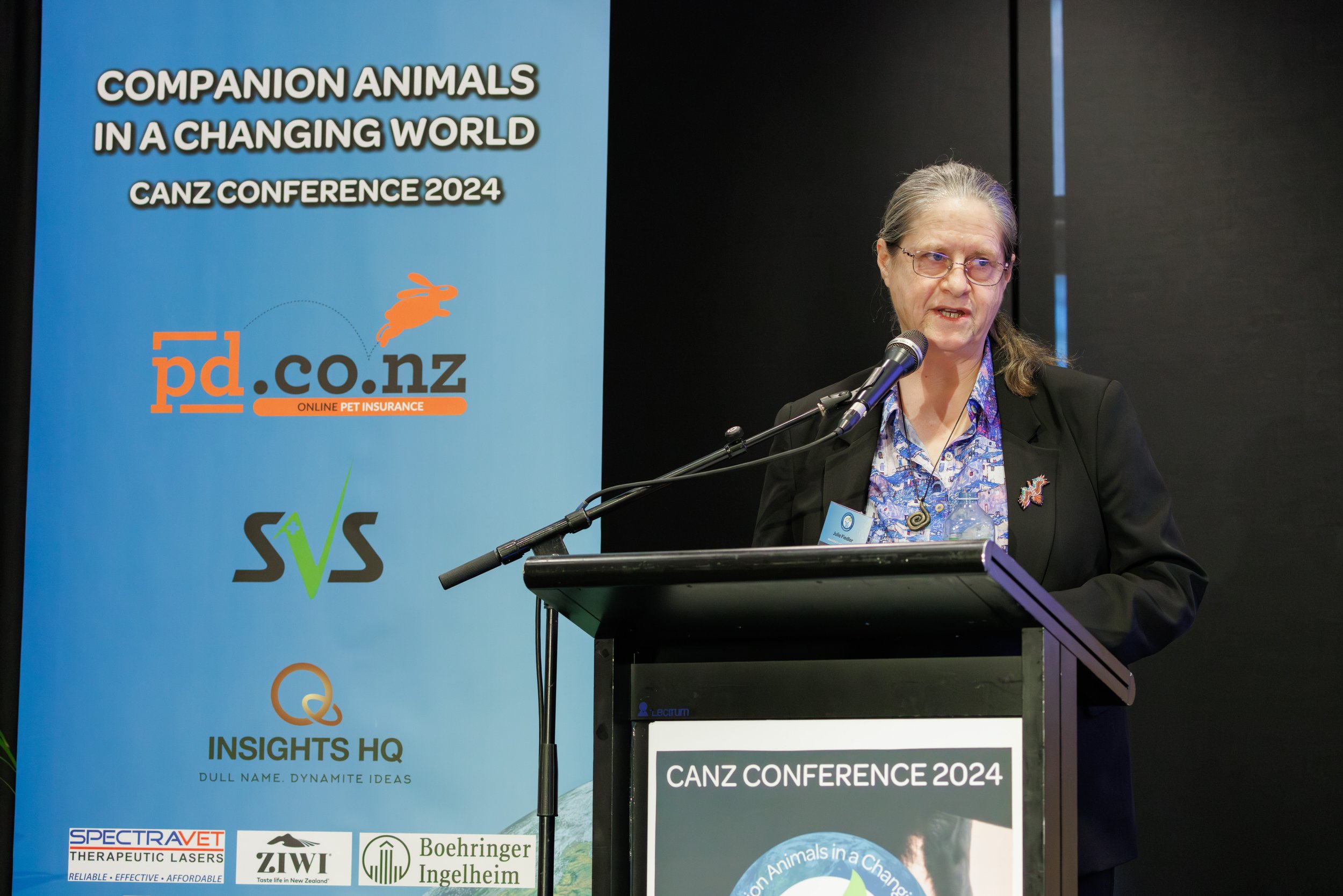
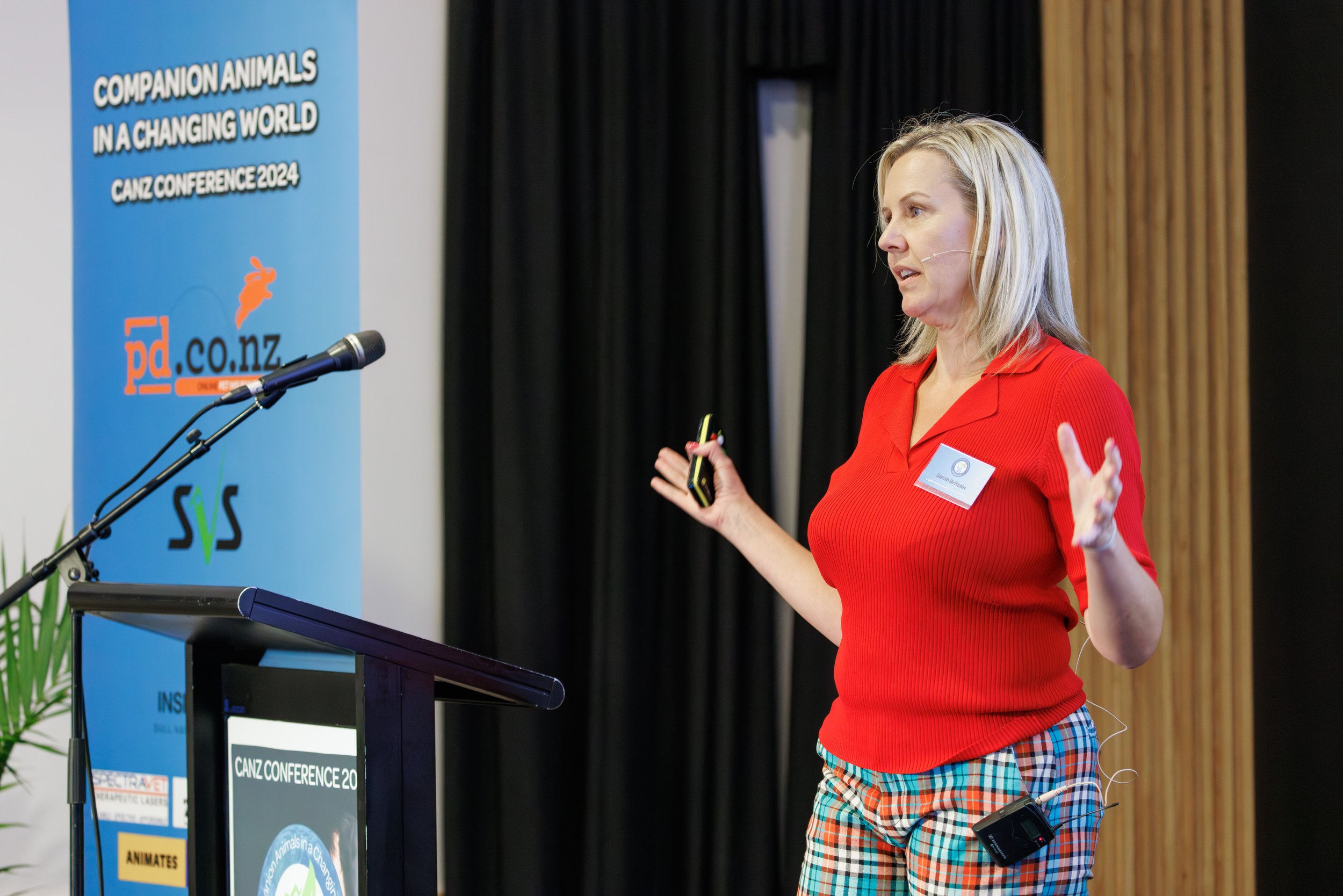
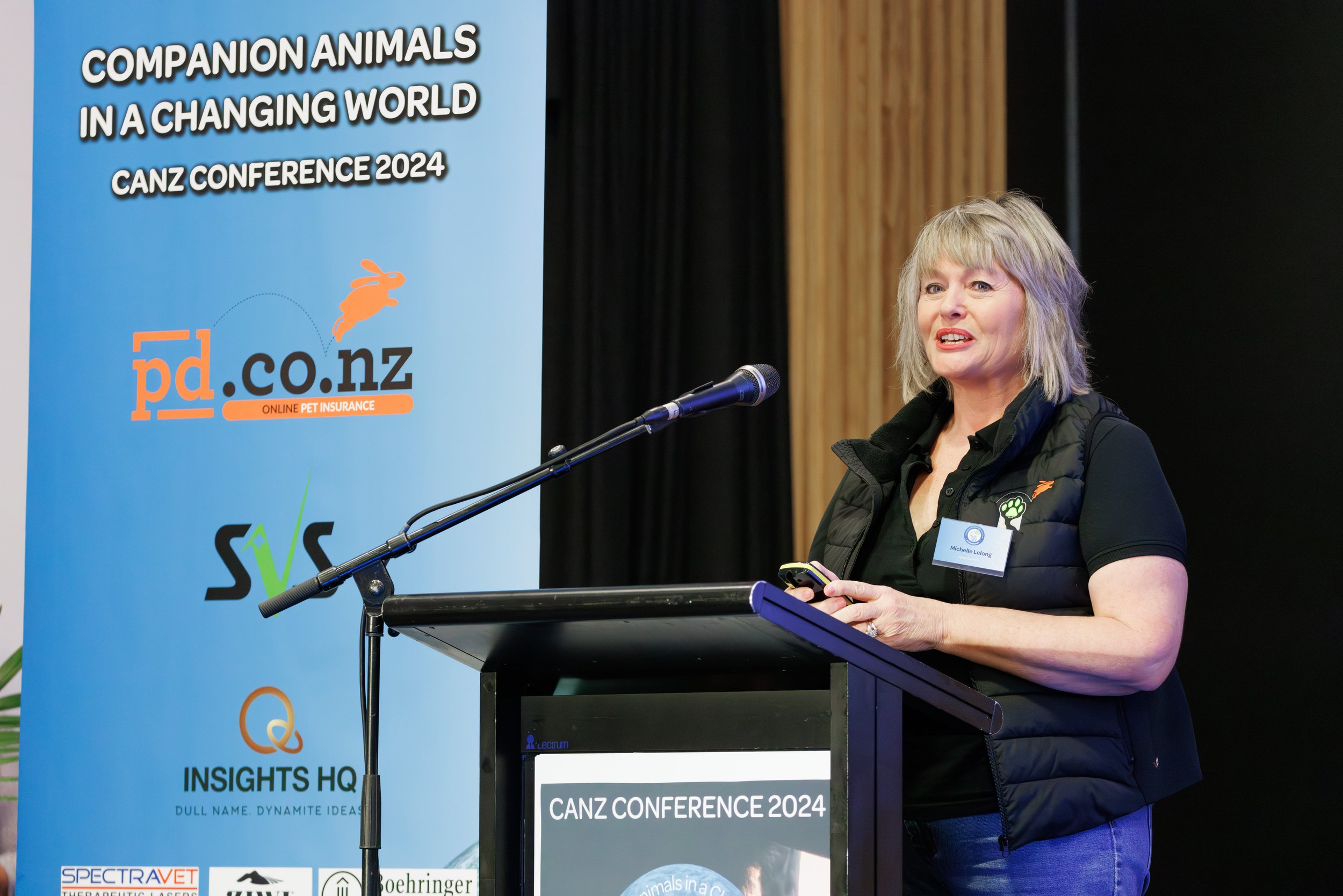
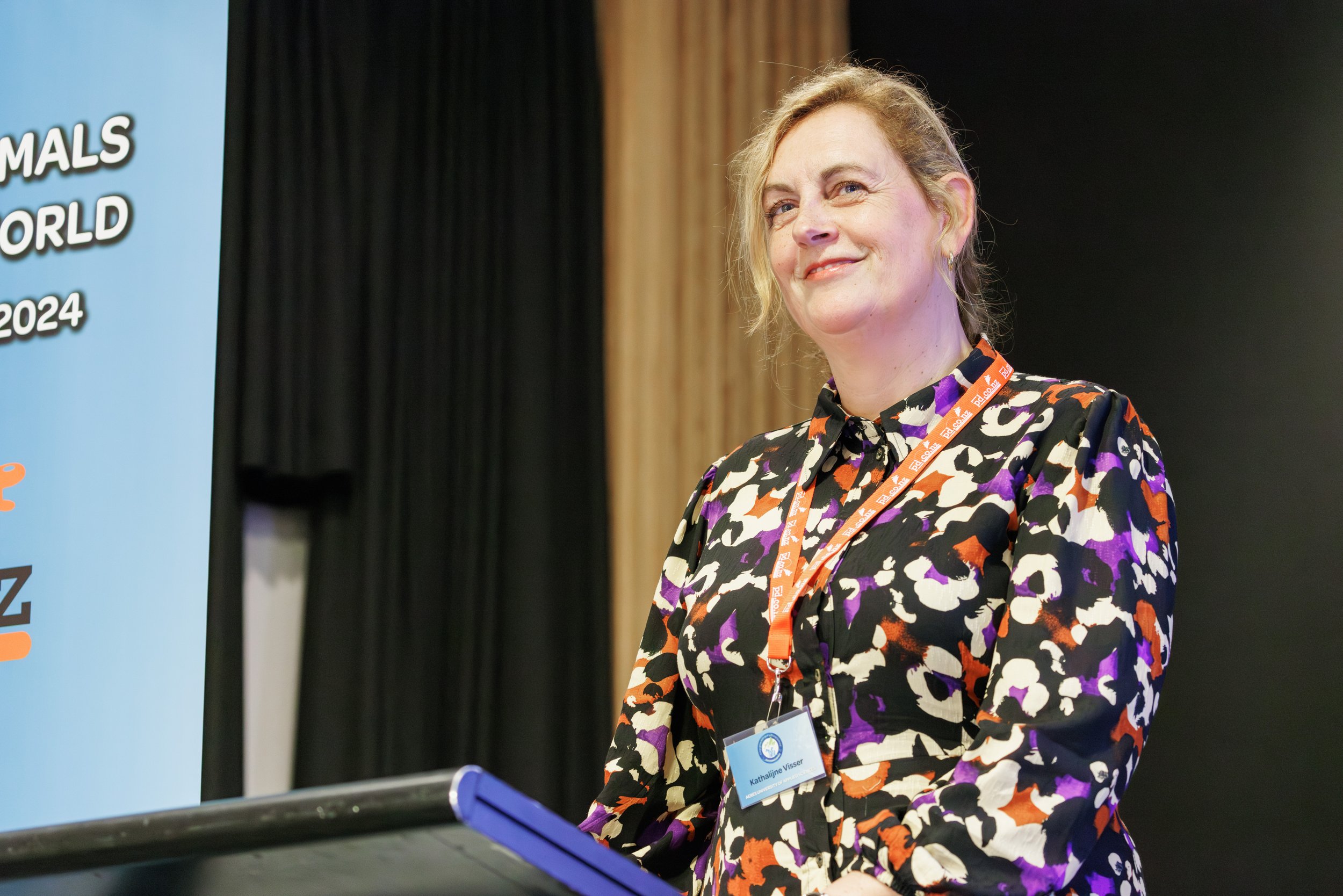
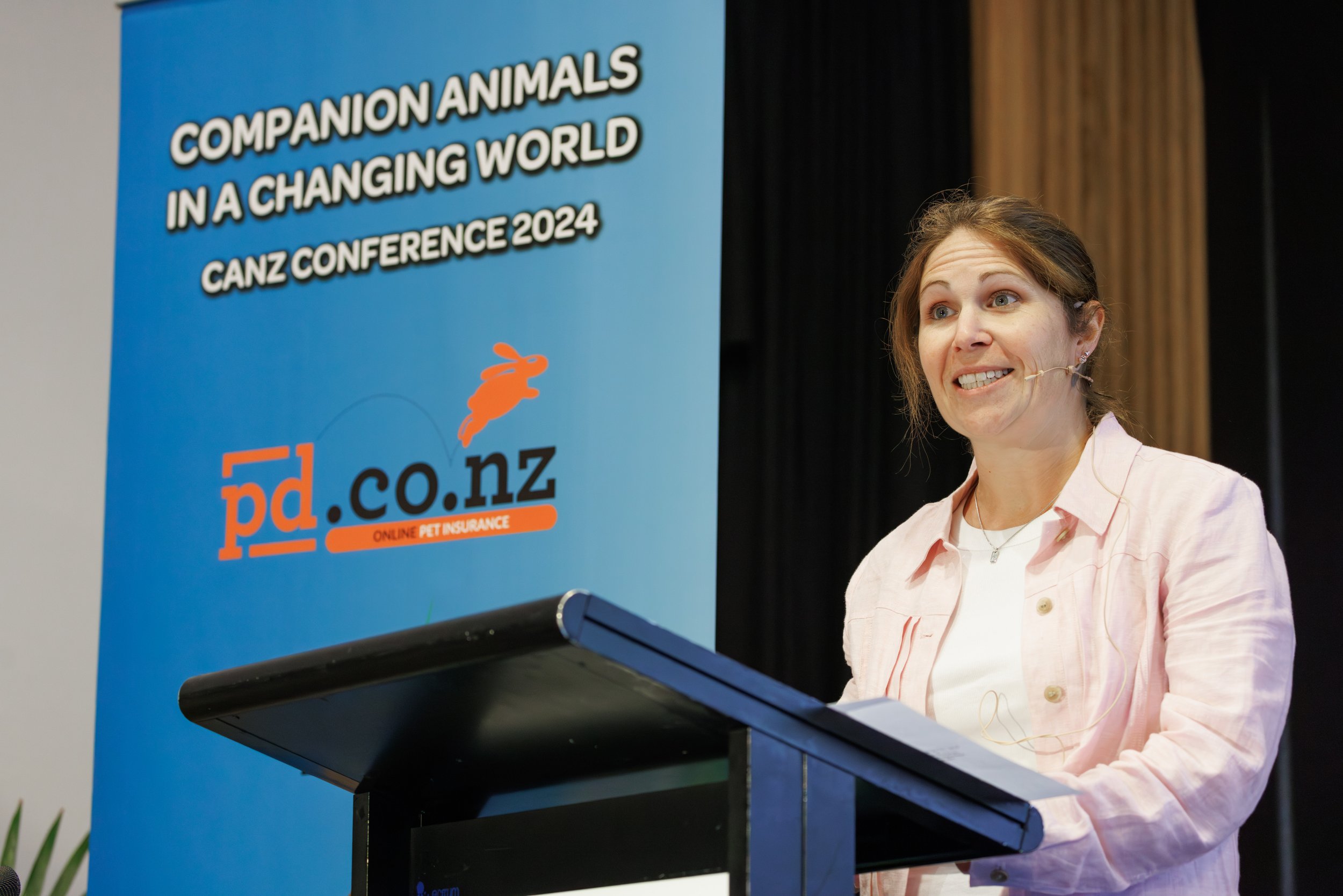
Companion Animals in a Changing World – Conference 2024 Wrap

Companion Animals NZ Chair, Steven Thompson, with Hon. Minster Hoggard

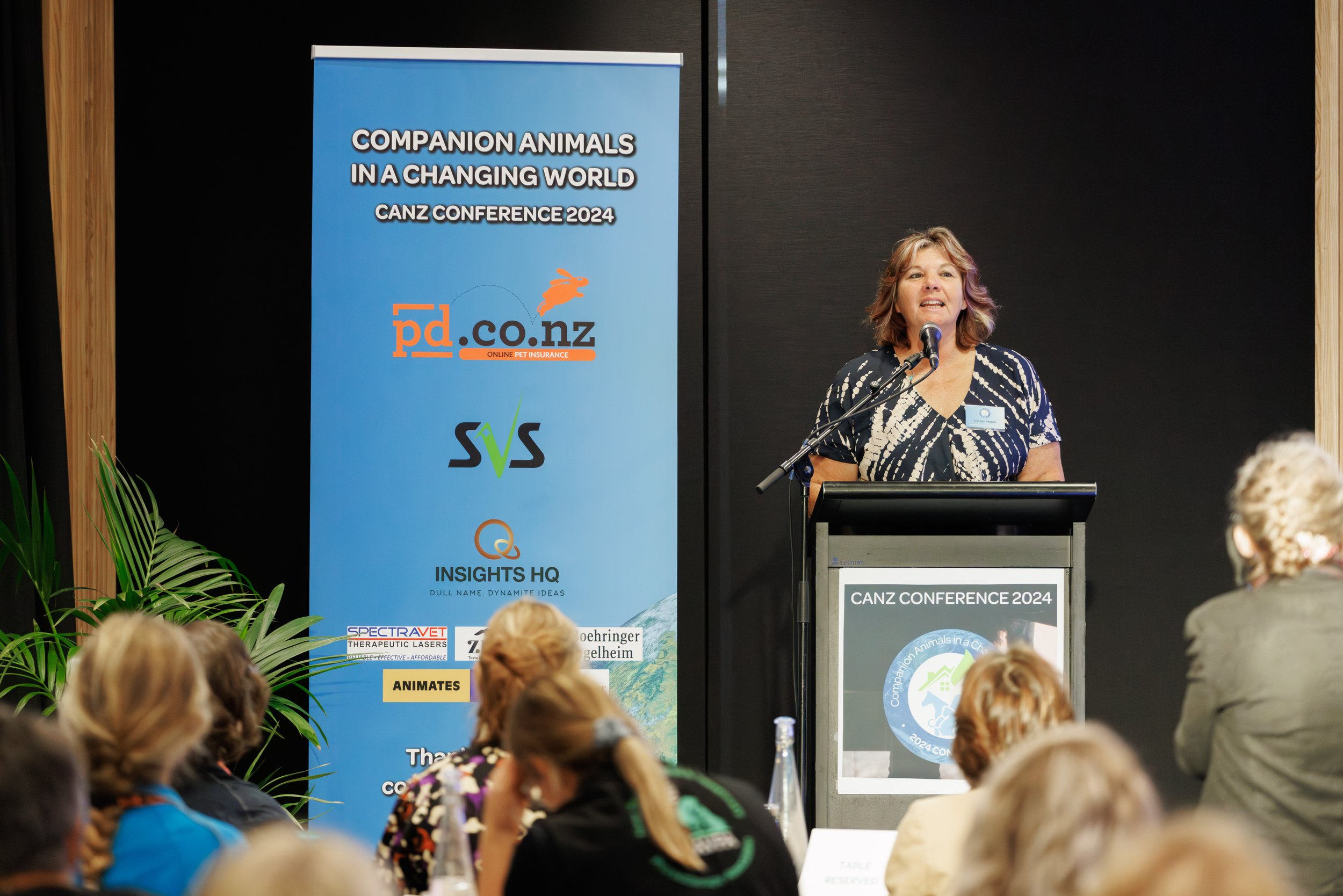
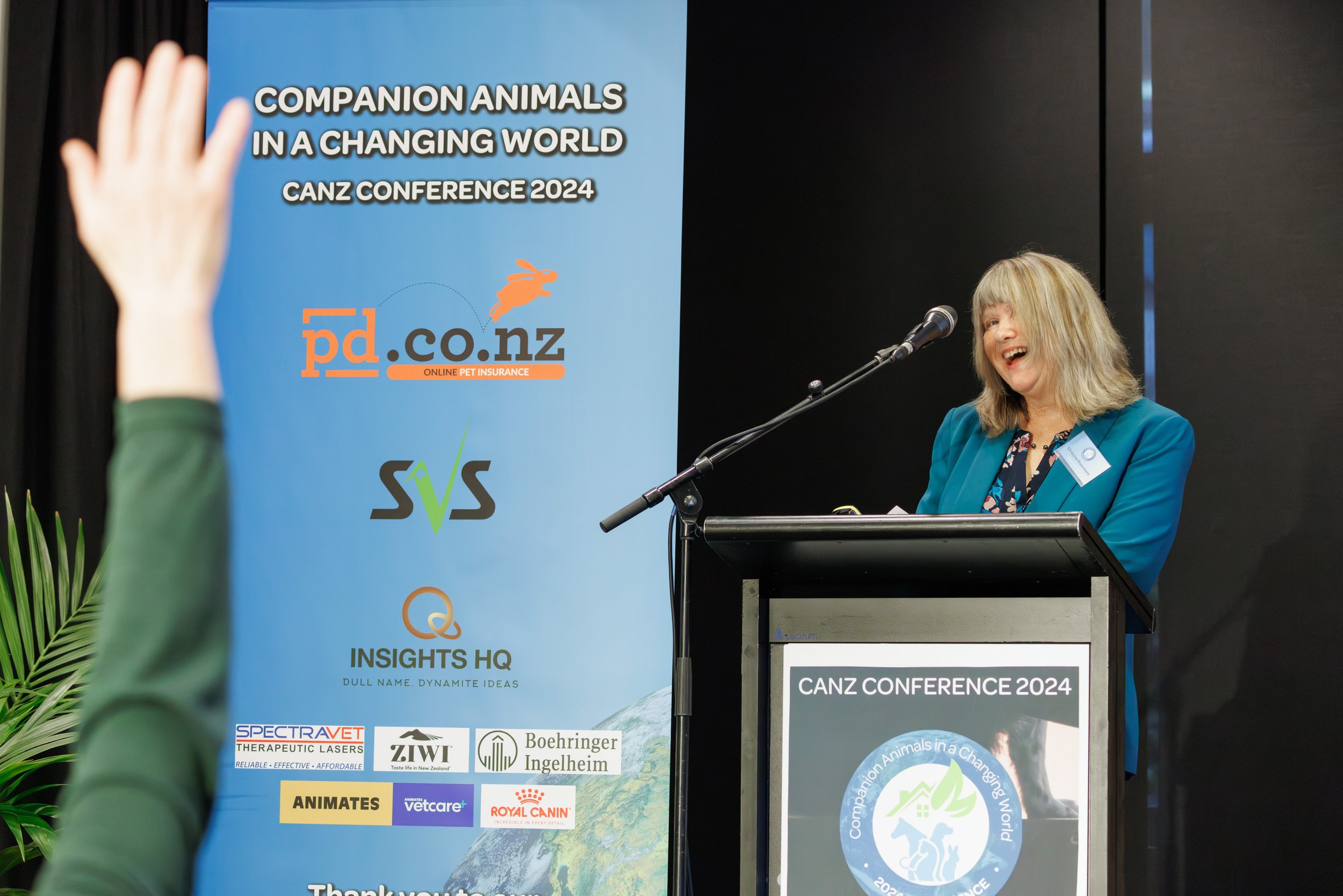
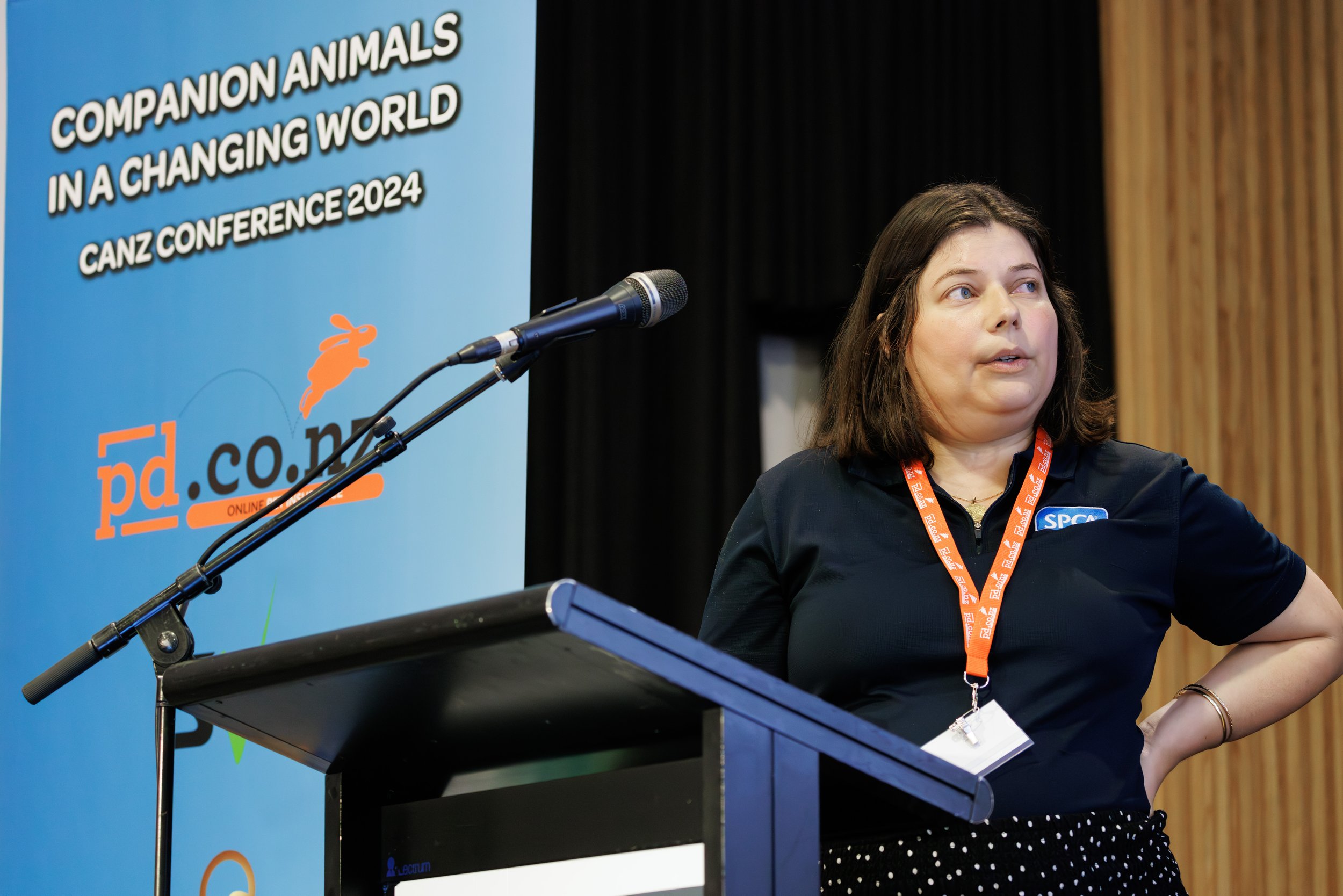
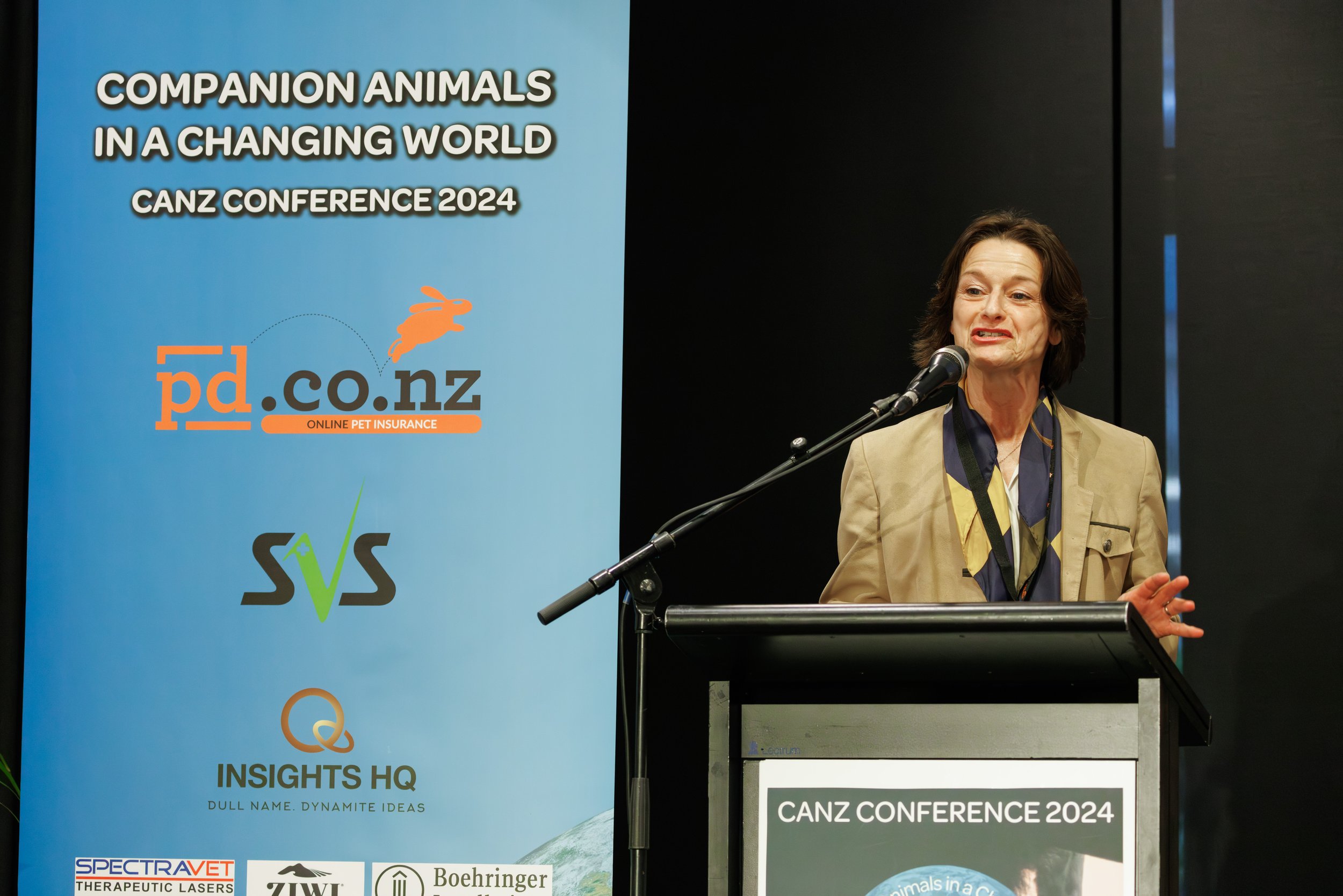
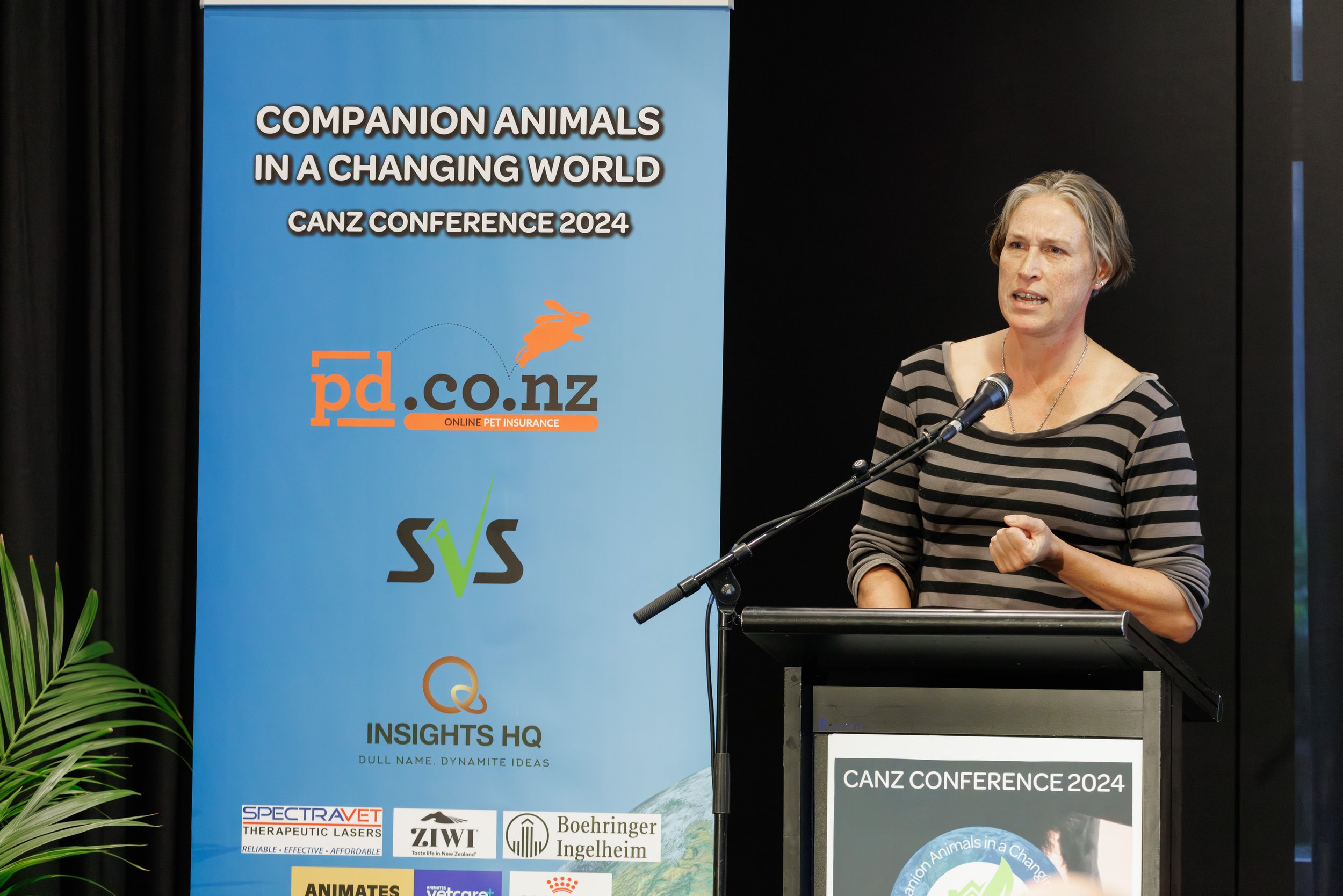
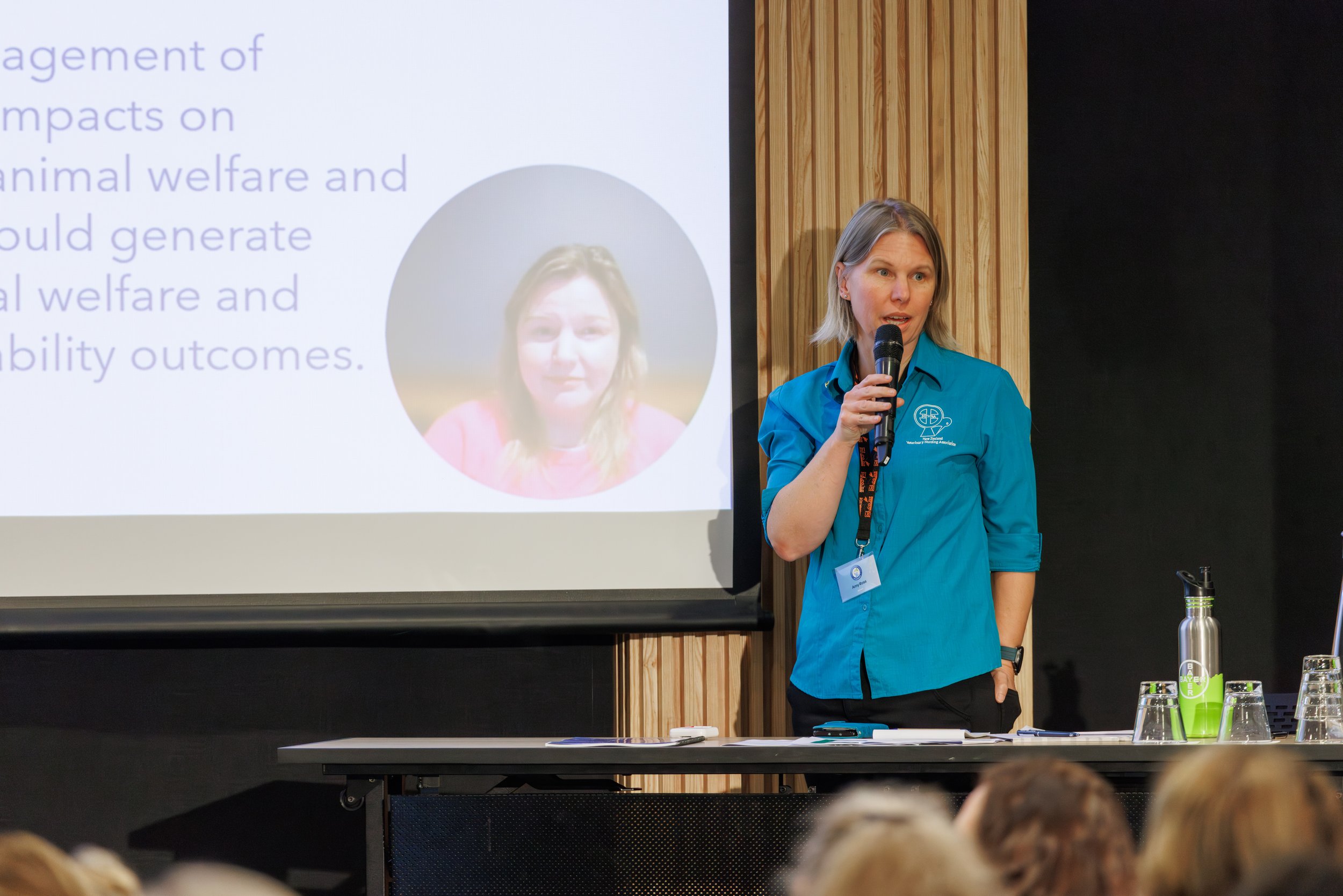
On 12 March, more than 120 animal welfare experts, including researchers, advocates and senior figures, gathered in Hamilton New Zealand to discuss the impact of the changing world on our pets. Hosted by Companion Animals New Zealand, this biennial conference serves as a platform to bring together diverse perspectives in animal welfare and foster industry-wide collaboration. 

The day was full of insightful presentations across a number of themes – from our changing expectations and changing climate, to our changing lifestyles and how we can provide a Good Life for our companion animals in a changing world.  

The conference commenced with an inaugural address by the Honorable Andrew Hoggard, Minister responsible for Animal Welfare, who underscored the intrinsic value companion animals hold in New Zealanders' lives. Drawing from personal anecdotes, including the cherished position of his own pets within his household hierarchy, the Minister emphasised New Zealand's steadfast commitment to upholding high standards of animal welfare. 

Keynote speakers included professors and expert practitioners from all over the world, speaking on a variety of topics including: 

  •  how societal views and our own lifestyle and behavioural changes have impacted our pets health and welfare (for example, working families and increased incidence of ‘modern’ diseases such as obesity in humans),  

  • how research around retired greyhounds in the UK is helping improve the success of efforts to home greyhounds and mitigate their rates of relinquishment, and  

  • how the environmental footprint of pet management including breeding, veterinary procedures and pet food production should be considered into the future.  

Also covered was the mutual benefit of the human and animal relationship and research around how we can measure an animal’s emotional experience to ensure it enjoys mostly positive emotions and has a good quality of life. 

Professor Nat Waran of Companion Animals New Zealand reflected on the  insights gleaned during the 2024 Companion Animals Conference, emphasising the important role this event holds as a catalyst for meaningful, forward focussed dialogue. She highlighted the importance of recognising our impact on companion animals and their welfare,  and cautioned against imposing human interpretations on their experiences. 

Waran remarked, "One key takeaway for me personally ist he need to view animal welfare through a lens devoid of human biases. Often, our perceptions of what constitutes a positive experience for animals may not align with their reality. As our understanding of the importance of positive human-animal relationships grows, so does our recognition of the ethical responsibilities we have towards them and their maintenance in our society." 

Expressing gratitude to the diverse array of speakers whose contributions enriched the conference, Waran spoke of the collaborative spirit that drives progress in animal welfare. She noted, "These gatherings foster an environment of sharing  and learning, paving the way for a more enlightened and compassionate approach to caring for our cherished companions to ensure they experience a good quality of life." 

Following on from the Conference day, the gala dinner saw the announcement of four incredible winners of the Assisi Awards, recognising animal welfare excellence.  The conference was also attended by participants online from various countries via a live-stream link.

Plenary and invited talks will soon be made available to the public via companionanimals.nz. Companion Animals New Zealand would like to thank all the sponsors who made this event possible – outlined below. 
WHY YOU SHOULDN’T RELY ON FACEBOOK TO FIND YOUR LOST PET

WHY YOU SHOULDN’T RELY ON FACEBOOK TO FIND YOUR LOST PET

The manager of the charity that runs New Zealand’s microchip database for pets is reminding pet owners that social media should be one of the last steps in the search for a lost pet.

On October 25th, Companion Animals New Zealand, merged it’s two pet services - the NZ Companion Animal Register (NZCAR) and LostPet.co.nz to create a “super site” for lost and found animals.

General Manager, David Lloyd, says the newly amalgamated site should be the first place people go if they have lost or found a pet.

“We have combined our free lost and found website with our microchip database of 1.2million microchipped animals.” says Lloyd.

“Many pet guardians have experienced that horrible feeling of having an animal go missing, and not knowing where to start. Now, our super site means guardians have a clear course of action to take.”

In New Zealand, microchipped animals are likely to be found and then scanned at any one of 900+ vet clinics, SPCAs or animal shelters, so Lloyd says it is important to check your details on the NZCAR are correct as quickly as possible.

“Because of the merger, people can also check our free ‘found’ listings at the same time. Every found animal that is taken to the SPCA will automatically get a LostPet listing on our site, so if your pet is not microchipped, or not registered, then the super site is still the best place to come.”

Performing a thorough physical search is an important second step, remembering that cats will usually be within a few houses of home and can be excellent hiders, especially if they are scared or injured.

If you still need to create a lost pet listing, then it is free to do so, whether your pet is microchipped or not, and then, finally, from there you can share your post to Facebook.

“Social media definitely has it’s place in lost and found pet reunions, and there are many well-managed pages in New Zealand” says Lloyd. “But Facebook curates content so not everyone will see your post, and your post will be pushed down the page as new lost animals are listed.”

Companion Animals NZ recommend posting to the NZCAR/LostPet site first and sharing from there, so guardians only need to manage their listing in one place. Listings are live for four weeks but can be renewed indefinitely.

“Ideally pet guardians would be proactive and get their pet microchipped before they go missing, and they should ensure that they are registered on the NZCAR.” Lloyd says the registration step is sometimes missed – as is often done by the vet clinic who implant the chip, but sometimes it is left for pet guardians to do themselves. It is also important to remember that NZCAR registration is different from council registration for dogs.

Lastly, Lloyd says to not give up hope. “We have dozens of stories of happy reunions after pets and people have been separated by large distance and many months”.

The NZ Companion Animal Register was launched in 2007 and now has registered 1,250,000 animals, including 700,000 cats, 530,000 dogs, 10,000 rabbits, and 700 horses. All animals adopted from the SPCA are registered on the NZCAR automatically at adoption time. Funds from the register are used to support desexing campaigns and for other animal welfare projects.

LostPet.co.nz, formerly knows as Pets on The Net, was established in 2002 and became a Companion Animals NZ service in 2017.

Companion Animals New Zealand provide a 24-hour support service for lost and found pets at www.animalregister.co.nz or on freephone 0508 LOSTPET (567 873).

Contact information:
David Lloyd
General Manager
Companion Animals New Zealand david@companionanimals.nz