Saturday 15 August is Check the Chip Day, when pet owners across New Zealand are encouraged to check their pets’ microchip details are up to date and ensure they can be reunited if they ever go missing – a message that takes on added significance as a new chapter begins for greyhounds as pets in New Zealand.
Thousands of lost pets are reunited with their families each year thanks to microchips - but a microchip alone is not enough. As National Check the Chip Day approaches on 15 August, the New Zealand Companion Animal Register (NZCAR) is urging pet owners to take a few minutes to check their pet’s microchip is registered and that their contact details are up to date.
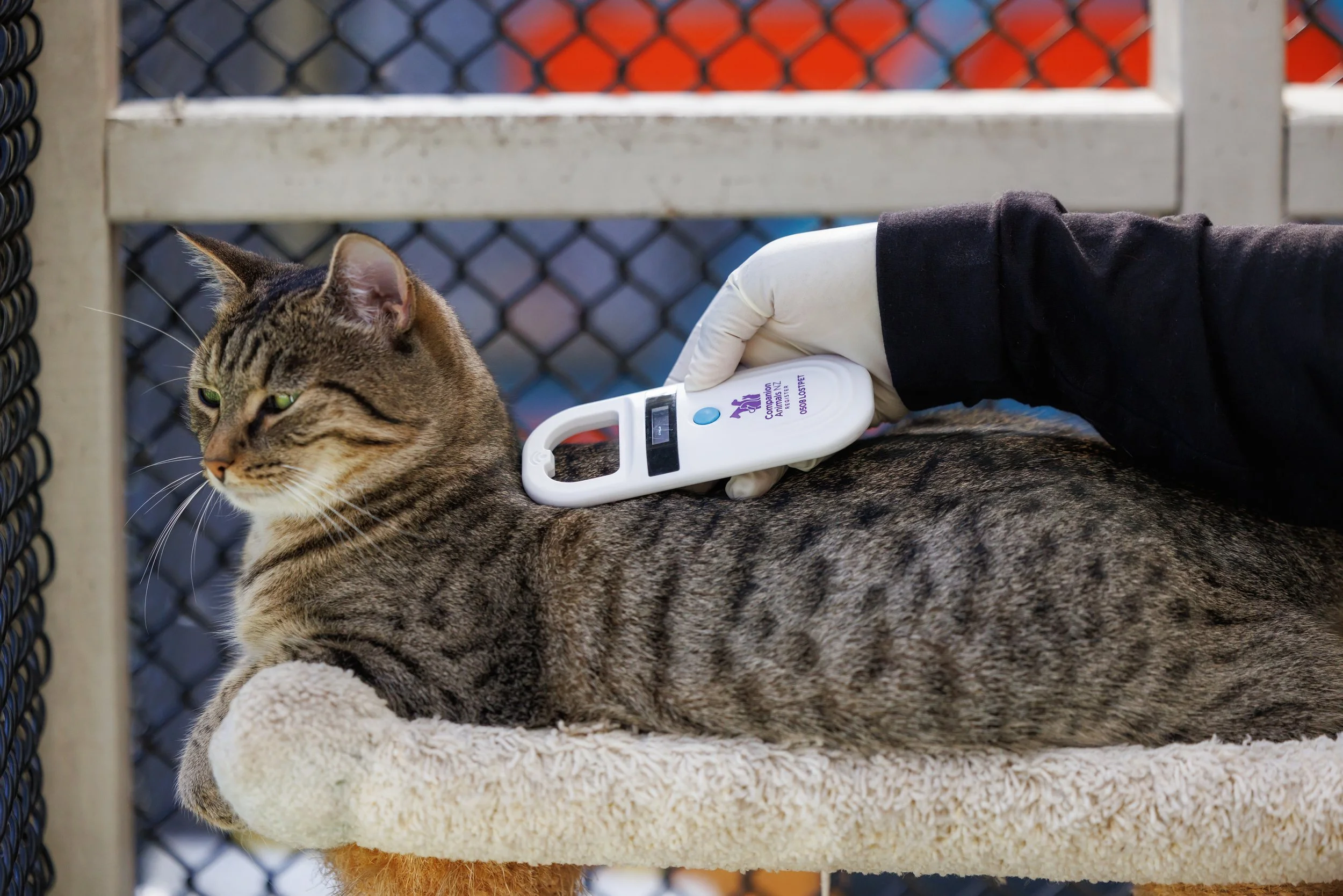
“A lot of people think a microchip stores their contact details or works like a GPS tracker, but that’s not true,” says NZCAR Manager Sarah Clements. “A microchip simply holds a unique identification number. It’s only when that number is linked to their family’s information in a registration database that it can help reunite a lost pet with their guardian.”
NZCAR says common misconceptions about microchipping continue to create barriers when pets go missing, including confusion between microchipping, registration and council requirements.
“Having your pet microchipped is an important first step, but keeping those details updated is what gives your pet the best chance of getting home if they are lost. This applies to species beyond cats and dogs too – we have goats, guinea pigs, birds and many more animals big and small registered with us.”
Pet owners are encouraged to:
✅ Check their pet’s microchip is registered on the NZ Companion Animal Register
✅ Log in to confirm their phone number, address and other details are correct
✅ Update their information if anything has changed
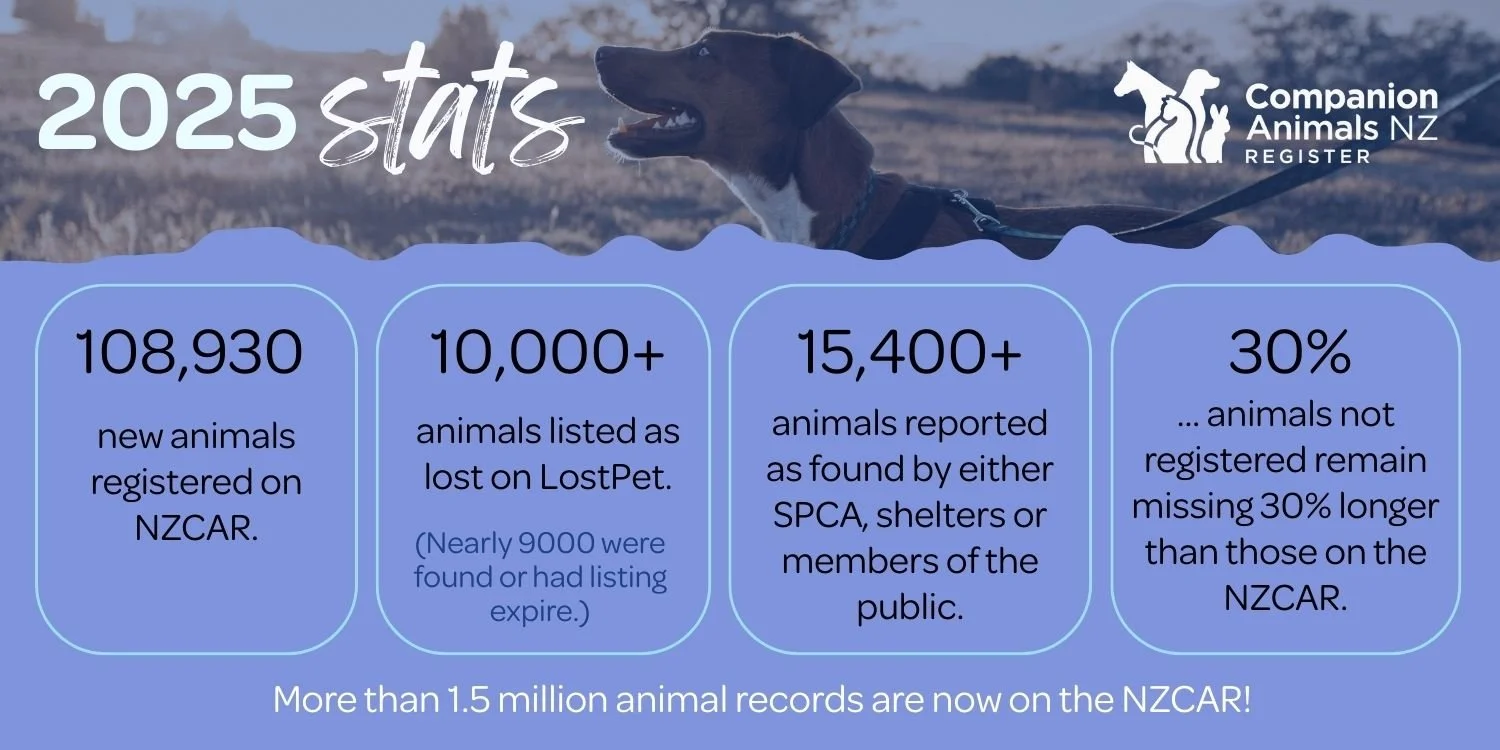
The NZ Companion Animal Register is New Zealand’s largest companion animal microchip database, with 1.5 million animal records, helping connect lost pets with their families through a network of Approved Users including vets, shelters and SPCA.
NZCAR also operates LostPet, New Zealand's leading lost and found pet platform, endorsed by the SPCA and the Ministry for Primary Industries (MPI) to help reunite lost pets with their families as quickly as possible. Since 1 January, there have been more than 9400 animals listed as lost by their families, and nearly 6000 animals who’ve been found and listed in the hope of tracking down their owner. As part of a national charity, NZCAR reinvests registration fees into animal welfare initiatives that support better outcomes for companion animals across New Zealand. A lifetime registration costs just $15 per animal, helping provide a permanent connection between pets and their families.
“Every registration helps strengthen the system that brings lost pets home, while also supporting wider work to improve companion animal welfare,” says Sarah.
Supporting greyhounds into their next chapter
NZCAR is also recognising the important role microchip registration plays as retired racing greyhounds transition into life as beloved companion animals. Through collaboration with the Greyhound Transition Agency, greyhounds moving into adoption homes will be registered with NZCAR as they begin this next chapter.
“Ensuring greyhounds have accurate microchip registration details is an important part of supporting their lifelong welfare,” says Sarah.
“We’re grateful to the Greyhound Transition Agency for recognising the importance of NZCAR registration and supporting the registration of these dogs as they transition into life as companion animals.”
Keeping microchip information accurate is a simple but vital step that supports greyhounds - and all pets - throughout their lives.
Website: www.animalregister.co.nz
ENDS
ABOUT CANZ
Companion Animals New Zealand (CANZ) is an independent, science-based charity committed to ensuring all companion animals live a 'Good Life' with responsible guardians. We use education, advocacy and community programmes to achieve this. We also operate the New Zealand Companion Animal Register (NZCAR), the country's largest microchip database with more than 1.5 million total registrations. Our Board comprises independent trustees from a range of animal welfare groups, including SPCA, New Zealand Veterinary Association (NZVA), Dogs NZ, Cat Fancy, the New Zealand Veterinary Nursing Association (NZVNA) and the New Zealand Institute of Animal Management (NZIAM).